How Mortgage Contingencies Actually Work (and Who Tracks What)
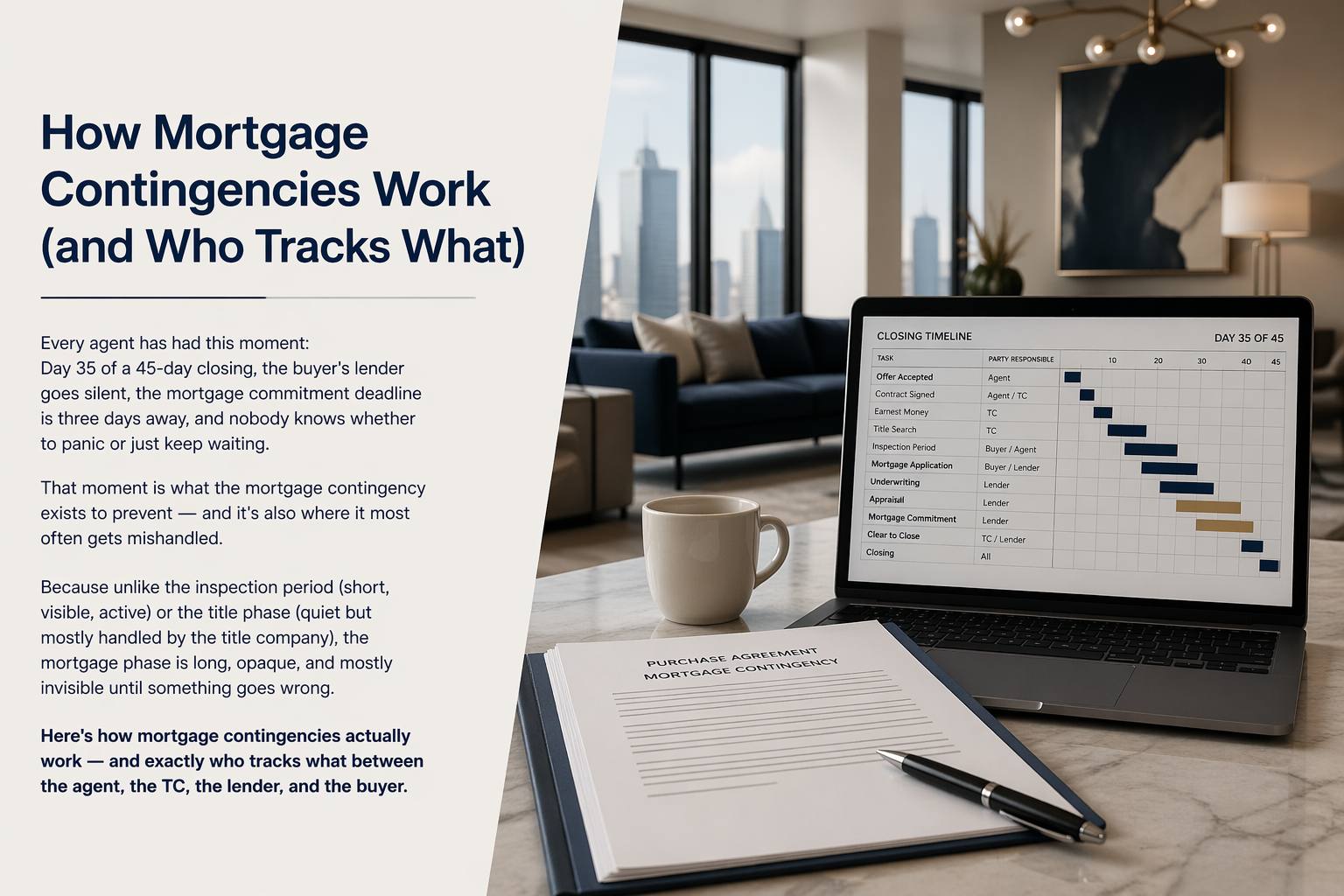
Every agent has had this moment: Day 35 of a 45-day closing, the buyer's lender goes silent, the mortgage commitment deadline is three days away, and nobody knows whether to panic or just keep waiting. That moment is what the mortgage contingency exists to prevent — and it's also where it most often gets mishandled. Because unlike the inspection period (short, visible, active) or the title phase (quiet but mostly handled by the title company), the mortgage phase is long, opaque, and mostly invisible until something goes wrong. Here's how mortgage contingencies actually work — and exactly who tracks what between the agent, the TC, the lender, and the buyer.

The Inspection Period Playbook: What Agents and TCs Handle Separately
The inspection period is the single most consequential stretch of any transaction. It's where deals get saved, killed, or quietly sabotaged by poor coordination — usually in a seven-to-fourteen-day window that feels about half as long as it actually is. It's also where the agent-TC relationship either clicks or falls apart. The agent owns strategy, relationships, and judgment. The TC owns logistics, documentation, and deadlines. Here's the playbook — who does what, in what order, and where the handoffs live so nothing falls through the cracks.