The Rise of Multi-State Transaction Coordinators
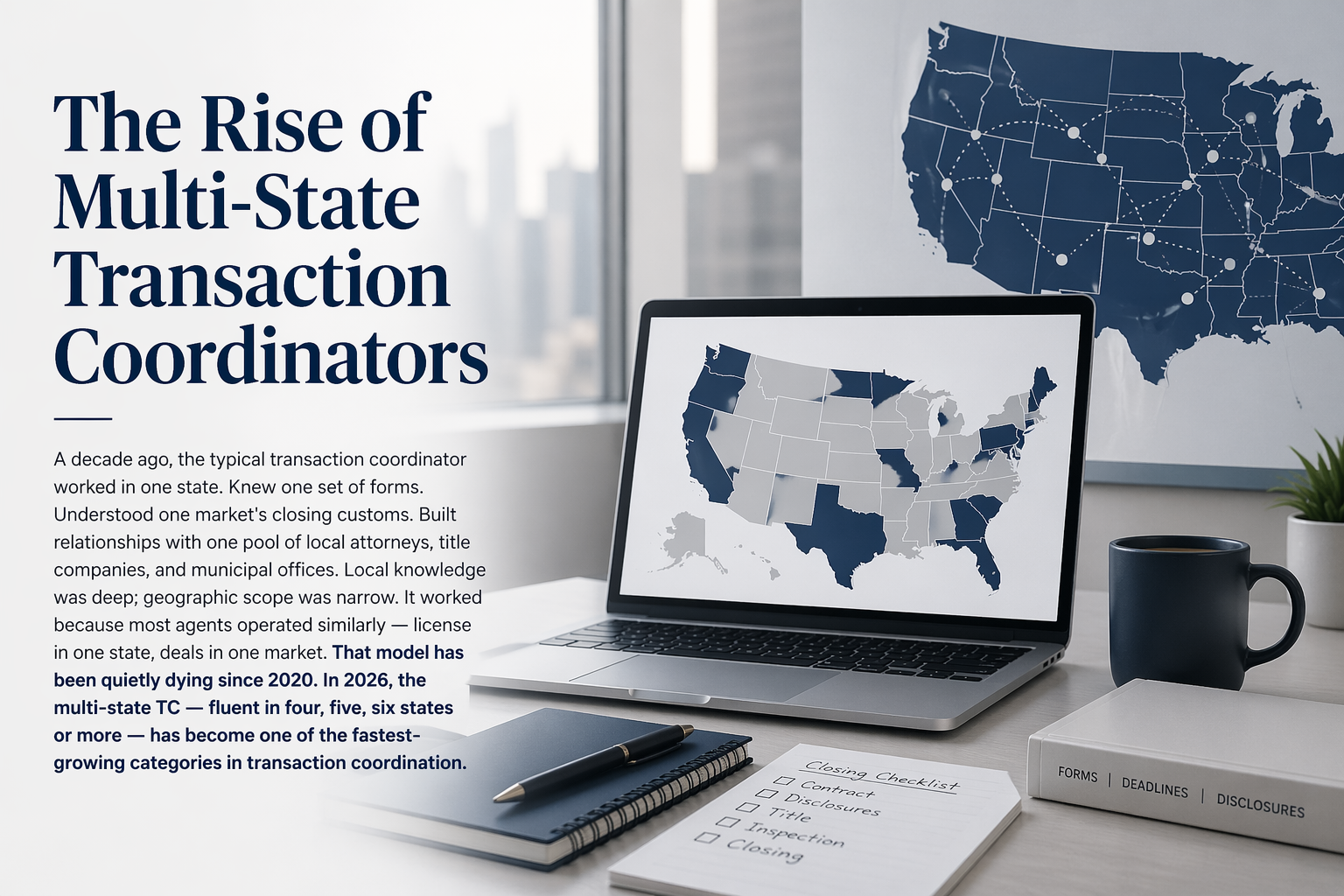
A decade ago, the typical transaction coordinator worked in one state. Knew one set of forms. Understood one market's closing customs. Built relationships with one pool of local attorneys, title companies, and municipal offices. Local knowledge was deep; geographic scope was narrow. It worked because most agents operated similarly — license in one state, deals in one market. That model has been quietly dying since 2020. In 2026, the multi-state TC — fluent in four, five, six states or more — has become one of the fastest-growing categories in transaction coordination.

Transaction Coordination Fees: Regional Benchmarks for the Northeast
Pricing a transaction coordinator service — or choosing one — is one of those things that looks simple on the surface and gets complicated fast. The "average price" depends on the state, the transaction type, the TC's experience, the scope of services, the volume you're running, and whether you're comparing to in-house salaries or outsourced fees. National averages get thrown around constantly, but they rarely reflect what Northeast agents actually pay. This is a clear-eyed look at TC pricing specifically for the Northeast — what the benchmarks actually look like in 2026, why the region runs differently than national averages, and how to think about what you should be paying.