NAR Settlement Effects on Transaction Coordination
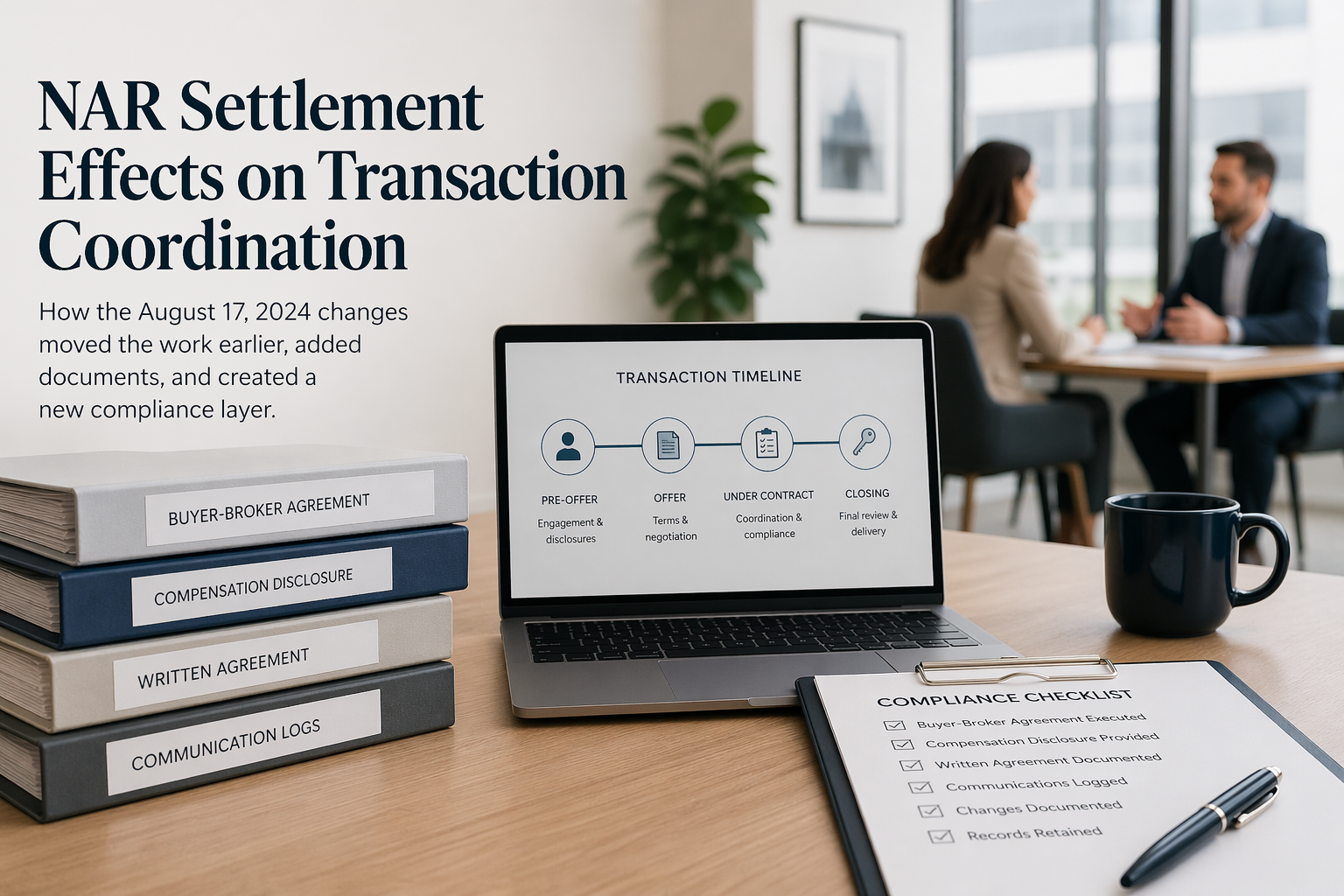
The NAR settlement didn't just change how real estate commissions get paid. It changed what transaction coordination actually is. When the practice changes took effect on August 17, 2024, most of the industry conversation focused on commission negotiation — who pays what, how it gets disclosed, what buyer-broker agreements should look like. That conversation has largely stabilized. What hasn't gotten as much attention is the quieter, structural effect the settlement has had on the transaction coordination function: the work has moved earlier in the deal, gotten more document-heavy, and added a new compliance layer that barely existed before 2024.

Why Transaction Coordination Became a Must-Have After 2020
Five years ago, hiring a transaction coordinator was a luxury. A status symbol for top producers, a nice-to-have for high-volume teams, something you got around to once you were closing 30+ deals a year and could "finally afford it." That's no longer true. In 2026, transaction coordination is operational infrastructure — the kind of thing agents running a modern business simply have, the way they have a CRM or e-signature tools. The shift didn't happen gradually. It happened in a specific window, between roughly 2020 and 2024, and it was driven by forces that have permanently changed what the real estate transaction actually looks like.