The Rise of Multi-State Transaction Coordinators
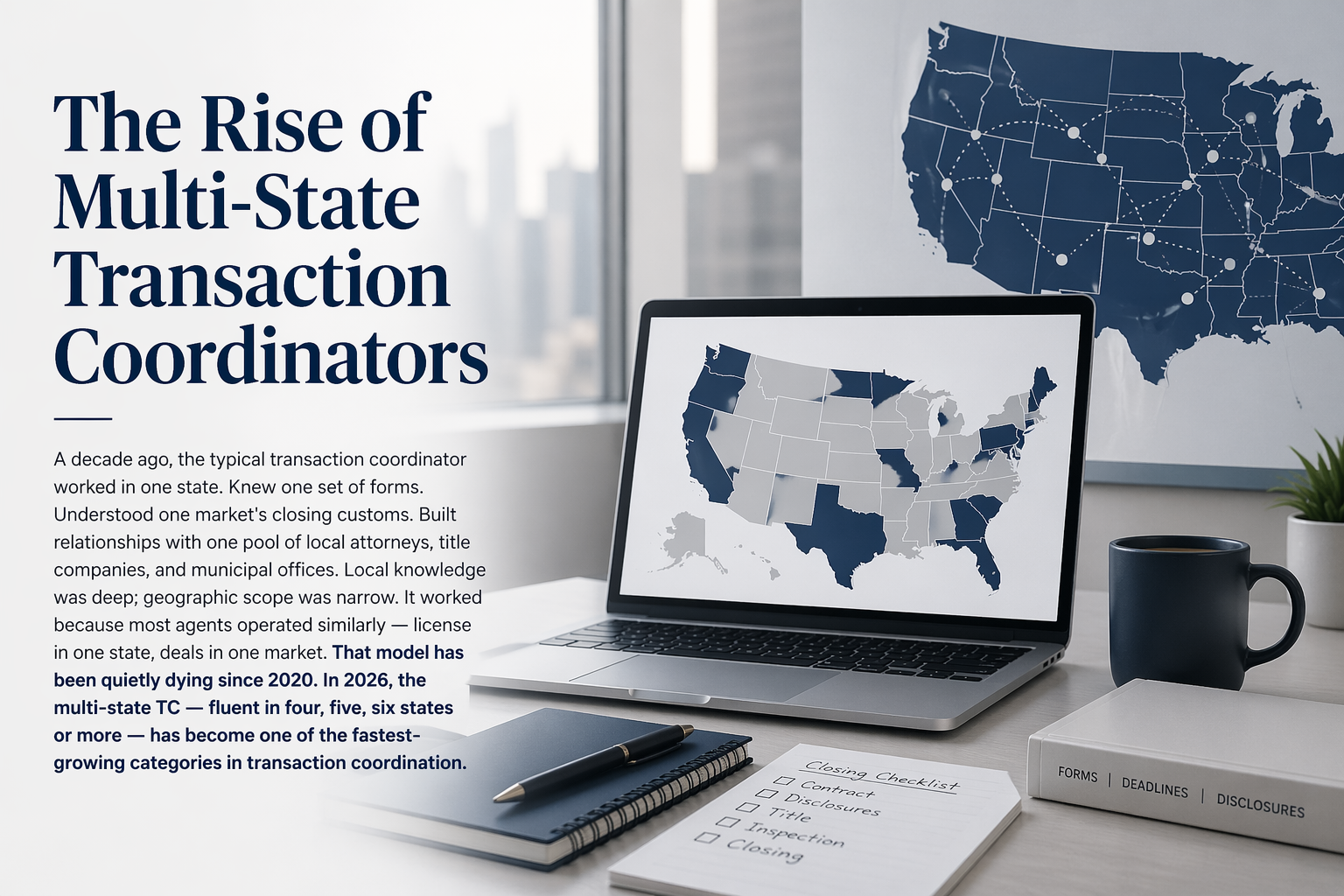
A decade ago, the typical transaction coordinator worked in one state. Knew one set of forms. Understood one market's closing customs. Built relationships with one pool of local attorneys, title companies, and municipal offices. Local knowledge was deep; geographic scope was narrow. It worked because most agents operated similarly — license in one state, deals in one market. That model has been quietly dying since 2020. In 2026, the multi-state TC — fluent in four, five, six states or more — has become one of the fastest-growing categories in transaction coordination.

The 2026 State of Real Estate Transaction Coordination
Transaction coordination has quietly become one of the most consequential parts of the real estate industry. Not in a flashy way — nobody's livestreaming TC work on TikTok — but in the structural sense. The way deals get managed, tracked, and closed has shifted meaningfully over the last three years, and 2026 is the year those shifts stopped being edge cases and became the norm. This is a snapshot of where the industry actually is right now: what's changed, what's driving it, and what it means for agents, brokerages, and the coordinators doing the work — from AI adoption to the rise of virtual TCs to the ripple effects of the NAR settlement.