
Crossing State Lines: What Agents Working in PA + NJ Need to Know
Working both sides of the Delaware River isn't something you just do. Pennsylvania and New Jersey are both turf states with no reciprocity — practicing in both requires dual licensing. Here's the actual path from PA to NJ (or vice versa), how to run a cross-border practice, and the operational realities agents need to know.

Title-Company-Driven Closings: How Pennsylvania Transactions Actually Work
Most real estate advice is written from an attorney-state perspective. Pennsylvania doesn't work that way. PA residential closings run on a title-company-driven model where the title company is the operational spine of the deal, and agents carry more coordination responsibility than they do in attorney states. Here's how it actually works.
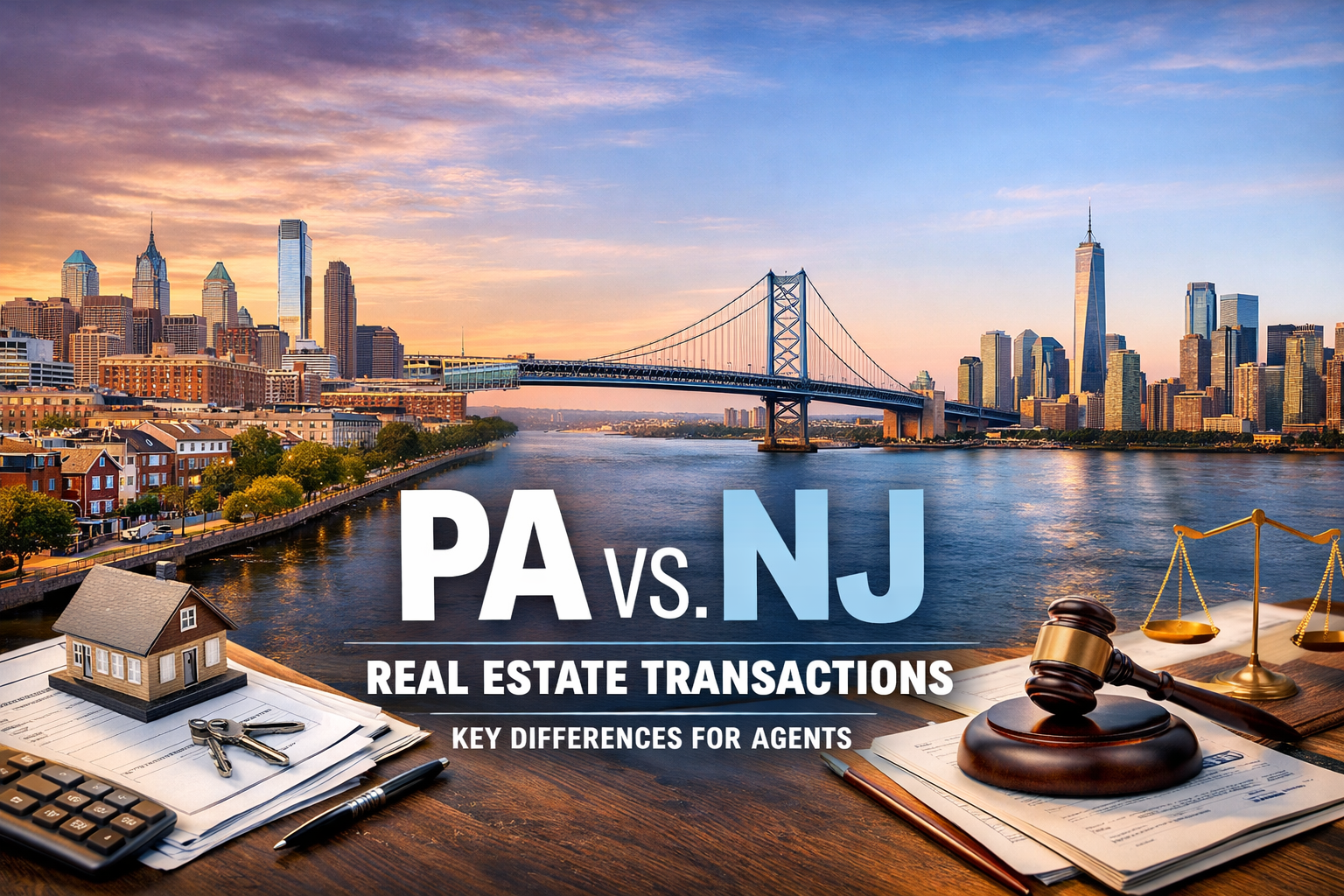
PA vs. NJ Real Estate Transactions: Key Differences Agents Miss
Pennsylvania and New Jersey look similar on the surface — same timelines, same contingencies, same Delaware River in between. The operational reality is that PA is title-company-driven while NJ is attorney-driven, and the differences in transfer taxes, attorney review, CO/UO, and mansion tax catch cross-border agents off guard constantly. Here's the field guide.
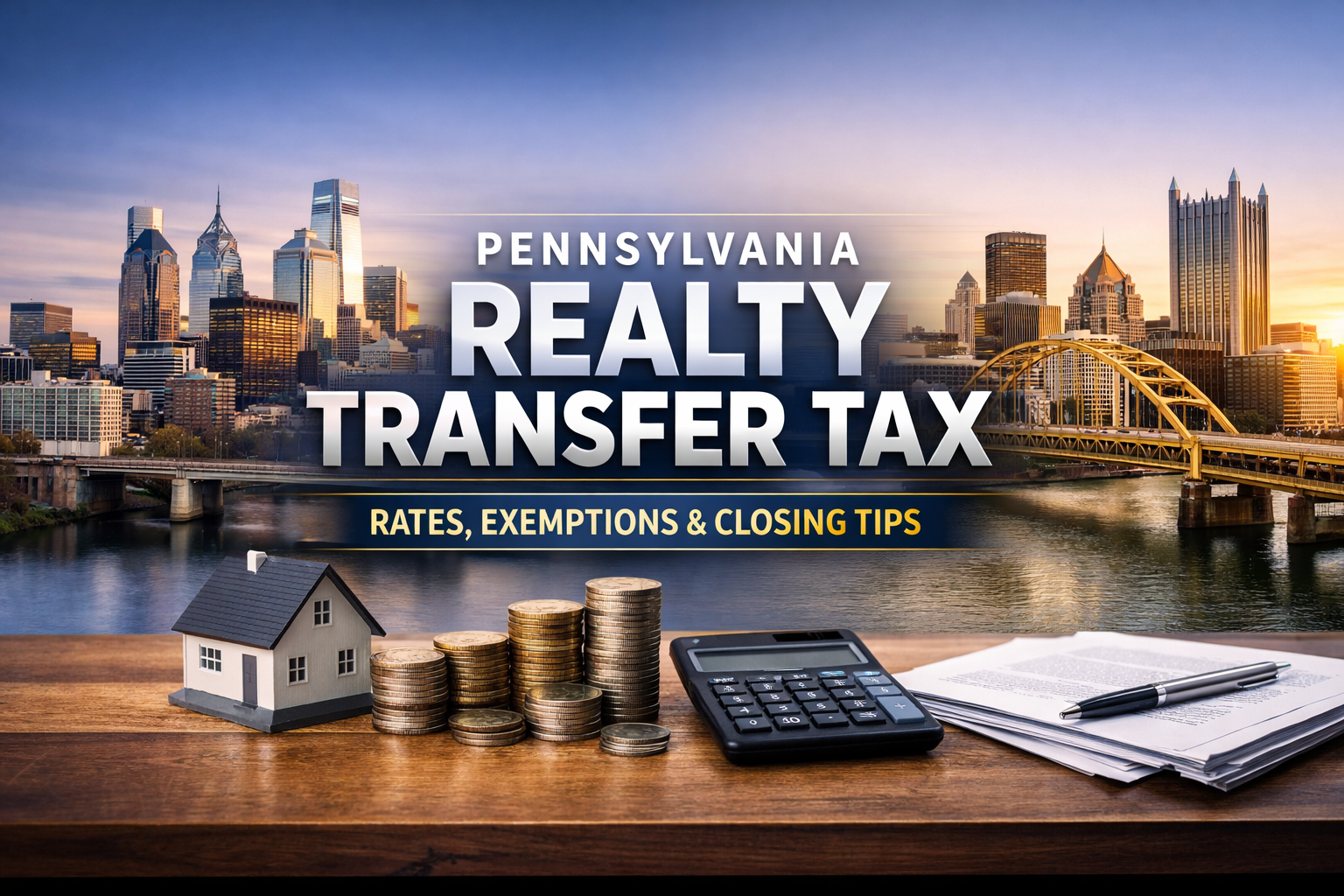
Pennsylvania Realty Transfer Tax: What Agents Need to Know
Pennsylvania realty transfer tax isn't one tax — it's a state 1% plus a local rate that varies by municipality, from 2% in most suburbs to 4.578% in Philadelphia and 5% in Pittsburgh. Here's the working agent's guide to rates, exemptions, who pays, and the mistakes that cause five-figure surprises at closing.